
Podcast: Play in new window | Download
Subscribe: RSS
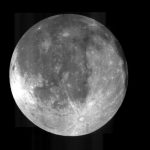
What if the Moon wasn't tidally locked to the Earth?
What would happen if the Moon wasn’t tidally locked to the Earth? What happens to all that mass and energy disappearing into a black hole? And how can we explain the space station’s crazy orbit?
If you’ve got a question for the Astronomy Cast team, please email it in to info@astronomycast.com and we’ll try to tackle it for a future show. Please include your location and a way to pronounce your name.
|
|
Shownotes
What would happen if the Moon was rotating fast enough that it was not tidally locked to the Earth?
- Tidal Locking — Wiki
- Dark side vs. Far side of the Moon — Bad Astronomy
- Geosynchronous Orbit — Centennial of Flight
When light and matter go into a black hole, where do they go?
- PhysLink answers this question
- 87 FAQs about Black Holes — Astronomy Cafe
- What is on the other side of a black hole? — Universe Today
- Episode 18: Black Holes Big and Small
- Frog in a blender was referenced in Questions show #6
Why does the space station’s orbit seem to oscillate between 60 degrees north latitude and 60 degrees south?
- Image showing ISS orbital track
- ISS orbital tracking
- More on the ISS orbit and its inclination — Sky and Telescope
What do telescopes pick up when they look at different objects — is it light waves or individual photons?
- Waves VS. Particles – University of Colorado
- Episode 83: Wave Particle Duality
Is Dark Matter “out there” or it is all around us?
- Dark Matter — NASA
- Dark Matter halo around the Milky Way — Universe Today
- Neutrinos — UCI
Did time pass so slowly during the Big Bang that it occurred infinitely long ago?
- Is the Universe Infinite? — WMAP
- Is the Universe Finite or Infinite? Interview with Joseph Silk of the University of Oxford
- Did time pass slower at the Big Bang than it does now? — Mad Science
If the sun classified as yellow, why is the color of daylight white?
- What color is the sun? — SETI League
- The Color of the Sun part 1 — Scientific Blogging
- The Color of the Sun part 2 — Scientific Blogging
Since the beginning of the show, has any of the science discussed changed?
- If you can think of anything, send an email to us!
Could Hubble or Cassini be boosted out in to space to save the spacecraft from destruction?
- Hubble’s Soft Capture and Rendezvous System — NASA
- Discussion: Possible Hubble End of Life Scenarios — NASASpaceflight.com forum
- Cassini FAQ’s, including what will happen at the end of the mission — Cassini website
- Episode 82: Space Junk
Transcript: An Unlocked Moon, Energy Into Black Holes, and the Space Station’s Orbit
Fraser Cain: I can’t believe that, while we were getting ready you’re like uh I might cut out a bit because there are tornado warnings.
Dr. Pamela Gay: [Laughter] Yeah, it’s pretty amazing and right now it’s all sunshine and birds chirping until the next wave of the storm come through.
Fraser: Yikes!
Pamela: It’s the Midwest.
Fraser: Okay so let’s kind of like this leads into I guess it doesn’t really lead into the show. What would happen if the moon wasn’t entirely locked to the Earth? And what happens to all that mass and energy disappearing into a black hole? How can we explain the space station’s crazy orbit?
If you have a question for the astronomy cast team please e-mail it in to info@astronomycast.com and we’ll try to tackle it for a future show. Please include your location and a way to pronounce your name.
First question comes from John dweAngelo location unknown. “What would be the impact of the Earth/Moon system if the moon was rotating fast enough that it was not currently tidally locked?”
Alright so I don’t know why listeners love the tidal lock of the moon. They can’t get enough. We get so many questions about this.
In the current situation the moon always displays the same face to the Earth but the Earth rotates and doesn’t display the same face to the moon. Now what would happen if the Earth was rotating and also the moon wasn’t displaying the same face to the Earth? If neither was tidally locked would there be any difference?
Pamela: Not in any appreciable way although we’d get to see what we call the dark side of the moon on a regular basis you would assume. Right now as the moon goes around it rotates once for every time it orbits the Earth. This way everything is kept in lock-step and we only get to see about half of the moon.
There are some vibrations and oscillations that allow us to see an extra few percent. In general we only see the same one half. If it was rotating faster or in fact slower such that it wasn’t tidally locked, we’d get to see that other side. Other than getting to see that other side, there’d be no appreciable difference here on the planet Earth. We’d just get to see a little bit more.
Fraser: I’m going to correct you before people kill you. It is not the dark side of the moon but the far side.
Pamela: Well and I’m thinking Pink Floyd here. It in fact [laughter] the far side of the moon gets just as much daylight as the side that we get to see on a regular basis but it’s been referred to as the dark side of the moon because of our understanding of it. We don’t know what’s there so that’s where the word dark comes from.
Fraser: There is always a dark side to the moon because there’s always half of the moon in shadow.
Pamela: Sometimes that’s the side that we get to see. So that’s the side we well understand when it’s in the shadow.
Fraser: Perfect. When Pamela says the dark side of the moon she means the mysterious other side of the moon that we can’t see from here on Earth. Of course we sent spacecraft and have it perfectly mapped. That’s the dark side of the moon.
I guess a long time ago nobody had any idea? It could be a big smiley face. Nobody knew what was on the other side of the moon. Anyway I digress. I have a question though, what would happen though if the Earth and the moon were tidally locked to each other?
Pamela: This is the case where if you were on the moon you’d see the exact same side of the Earth all the time and here on Earth we already see the exact same side of the moon all the time. For that to happen today without changing the rotation rate of the Earth so that we still had 24-hour days you’d have to bring the moon in way, way closer.
Here you’re actually going to have to stick the moon in a geosynchronous orbit. It’s going to make its way up to where we stick weather satellites and communication satellites. It’s still far enough away that it isn’t going to get broken up by the tidal effects of Earth’s gravity shredding it to bits. But it would certainly fill a much larger segment of our sky.
We’d have much higher tides except the tides wouldn’t actually ever change. You’d end up with the exact same tide always on the same place beneath the moon. One way to think of it is one part of the Earth would have higher water tables than another part of the Earth.
Fraser: But it would never really change, you’d never really notice. There would be no tides because this would be over the shore of where the ocean is.
Pamela: Exactly. If you’re sitting in New York you’d always have the waves hitting one height on the shore. If you’re sitting in California you’d always have the waves hitting another different part of the shore where the sun would suddenly become the primary source of the tides and it really doesn’t affect the tides that much.
Fraser: Okay but in the case where the moon is not tidally locked just rotating normally there’d just be no change.
Pamela: Exactly.
Fraser: There’d be no difference whatsoever. Being tidally locked not tidally locked, it doesn’t change the Earth at all. If the two were tidally locked together then we would have a different situation, very cool.
Erin Warner from Fergus, Ontario, Canada asks: When light or matter goes into a black hole where does it go and what happens to it?
[Laughter] I think we covered this earlier but I guess the question is when stuff goes into a black hole where does it go?
Pamela: Well to state the very stupidly obvious it goes into the black hole. Basically it’s going down and we assume – we can’t get inside of the event horizon of a black hole and send information back out, we assume that down within the event horizon there is a collapsed star or a section that is like the combined mass of a lot of collapsed stars eating gas, stars that didn’t even bother to collapse before getting consumed.
Supermassive black holes are going to have bigger guts than normal stellar mass black holes. Once you’re inside that event horizon you just have this giant blob of mass that has a state that we don’t really understand. We know that normal stars are made up of electrons, neutrons, protons.
We know that white dwarfs are made up of condensed matter where the electrons actually form what we call a degenerate gas where they’re packed in as tightly as they can. The nuclei themselves are in some cases forming a crystal.
With neutron stars we get an even higher density environment where protons and neutrons and electrons, it’s actually such that the electrons and protons combined give off energy and all become neutrons. Everything just becomes in this case a neutron gas.
Once you condense things further we’re not sure what happens. The state of matter inside of black holes is one of those things we’re still trying to figure out. We’re not there yet.
Whatever that weird new state of matter is the light, the mass, everything that falls into a black hole gets glommed in to this blob of matter and energy that has this new state of matter.
Fraser: It all turns into increasing the mass of the black hole.
Pamela: Exactly.
Fraser: If a planet falls into the black hole, the black hole gets more massive. If a whole lot of light falls into the black hole, the black hole gets more massive.
Pamela: It’s all the energy in mass. It’s two sides of the same coin and it just makes the gravitational pull of the black hole all that much bigger.
Fraser: I think we’ve used this analogy in a few shows before. A black hole is not a portal. A black hole is not a doorway to another dimension. It’s not a hole in the ground. It’s not a conduit to another world.
A black hole is a car crusher. A black hole [laughter] is a garbage compacter. When you put a car into a car crusher and go where does the car go? The car has gone in to the car compacter and has been compacted. That’s it.
As we said early on in the show, I think our black hole show, it’s like a frog thinking about that blender going wonder where that blender goes. I’m going to jump in and be transported to a magical dimension. Really when you go, you go into the blender and turn into blended. [Laughter] That’s where it goes. So black holes – same thing there is no place. A black hole is not a transportation system. It is a destination.
Jim Dennis from Chapel Hill, NC has a question about the ISS orbit, the International Space Station orbit. Why does its orbit appear to oscillate from about 60 degrees north latitude across the equator and down to about 60 degrees south latitude and back again? I thought when you were traveling 27,000 kilometers per hour in orbit you’d be traveling in a straight line. Is this a function of the flat map on my flat computer screen?
I know what Jim’s talking about here. If you look at a – NASA has this they have a listing of the space station’s orbit and it does, it’s like this ‘S’ curve that’s on the map. You can see it follows this path that takes it way up and then way down and then back again. So Pamela, what’s going on?
Pamela: The space station is moving in a fairly circular orbit around the planet Earth. That circular orbit is inclined relative to the equator so at one point in its orbit it’s directly over the equator. At another point in its orbit it is down well south of the equator. At another point in it its orbit it is up over Canada somewhere visiting you. The problem is the Earth is rotating beneath all of this.
We have International Space Station going around and around going north and south on its inclined orbit. The parts of the planet Earth that are beneath it when it is at its most northerly point, when it is at its most southerly point, those points on the planet Earth are constantly changing. On one orbit it may be up over Canada on the next orbit the International Space Station may be up over Siberia.
If you were able to take that map that you see on your two-dimensional screen and cut it apart, tape its two edges together you could trace that orbit around and around and see that it is really just a rotating circle that is inclined. You can actually do this with a hula hoop over your head.
If you take that hula hoop and you hold it in a fixed position and slowly rotate inside of that tilted hula hoop you’ll see that the uppermost part and the down-most part of the hula hoop map to different parts of your body. They’re over different parts of your body as you rotate beneath the hula hoop.
Fraser: Right. Makes sense to me, let’s move on. Stuart Kinear asked: I know that light can be a particle or a wave. What I’m confused by is what our telescopes pick up when they look at distant objects? Is it a light wave like a ripple in a pond when my back yard telescope picks them up or are they individual photons hitting my eyes? Are photons waves and particles at the same time? Are they forced to be one or the other depending on how they’re observed?
This is the question that has plagued physicists for hundreds of years [laughter] right? We have a certain Swiss patent clerk who helped us come to the answer. What is it, when you’re looking through a telescope and you’re seeing light, what are you seeing?
Pamela: You’re seeing both a particle and a wave. And I know that’s highly unsatisfying.
Fraser: How can it be both? It’s got to be one or the other.
Pamela: No it doesn’t have to be one or the other. The thing to think about is when you’re seeing the array disc around a really well-focused star. That array disc is formed by the different waves in all of the different photons hitting your telescope interacting and interfering with one another.
When you have all of the different points all of the different particles of light coming to focus in a single point and chemically reacting with your eye they’re acting as particles. At every moment we have both particle and wave phenomena going on at the same time.
Different effects of your telescope are caused by different parts of the phenomena. When you’re seeing COMA that we generally treat as a particle problem where the different particles of light are coming to a focus at different points due to the lenses involved in the system.
When you’re dealing with chromatic aberration though, you’re dealing with light acting as a wave and the different colors of light are bending in different ways. All the time we’re seeing photons as both particles and waves.
Fraser: Okay and we’ve done a whole show on that called Wave Particle Duality which is episode 83 of Astronomycast. We go into that in more detail and yeah, it is both and that’s confusing and [laughter] sucks to be human and try to understand it.
The universe doesn’t care. This is how it works and if we’re having trouble understanding it that’s too bad.
Pamela: Reality is far more amazing than anything we can imagine. That’s what hurts to take quantum mechanics.
Fraser: Which we haven’t done a show on yet. So we should do that at some point.
Pamela: Sounds like a plan.
Fraser: Mike Maswich sked: is dark matter something that’s ‘out there’ or is it all around us? I guess what Mike wants to know is we know that dark matter is in these vast halos that surround galaxies but if we could somehow pull out our dark matter detector and detect it right here in the solar system or right here on Earth would there be any here?
Pamela: Yeah. That’s one of the cool things is there are actually theorists out there who are working to calculate how much dark matter there probably is within our own solar system.
We probably interact with dark matter on a regular basis. It just passes right through us.
Fraser: Don’t you mean don’t interact with it on a regular basis [laughter]?
Pamela: Well that’s probably the case. We are co-located in the same room as dark matter on a regular basis. We’re still trying to figure out what dark matter is.
One of the particles that make up part of dark matter we think might be the neutrino. We know that we’re interacting with neutrinos all the time. We just need to find the rest of its siblings and build up a model.
All the models we have include dark matter existing everywhere just in differing amounts everywhere. Everywhere happens to include right where we are today.
Fraser: Then right now there could be millions of particles of dark matter streaming through my body?
Pamela: Yes.
Fraser: Or not [laughter] if we don’t understand how dark matter works at all and that it’s just a function of gravity.
Pamela: What we do know is the amount of dark matter inside the solar system at any given moment is very, very small. We don’t have to include it in any of our gravitational calculations.
The possibility of high speed, fast moving not contributing a lot of matter, particles that is non-zero. If neutrinos are part of it we know that there are neutrinos passing through you every second.
Fraser: Yep so it is both out there and all around us. Probably. Thomas William Pawlett from Essex in the UK asked: under general relativity we know that time slows as the gravitational field increases. In a singularity that was the big bang mass and gravity were infinite. Does that mean that time passed so slowly in the big bang that it was really infinitely long ago?
Okay, was in the big bang mass and gravity infinite?
Pamela: Only if the universe itself is infinite.
Fraser: Aha! Okay so you’re saying that if we have a finite universe then there was a finite amount of material so you have a finite amount of mass and a finite amount of gravity.
Pamela: Yes, when astronomers talk about the amount of mass in the universe we usually talk about the mass-density, the amount of mass in a cubic meter of space in a solar system size volume of space.
We worry about how much density is there within some volume not how much stuff is there in the entire universe. We still don’t know for certain if we live in a finite or an infinite universe so we have to deal with densities instead.
Fraser: Okay, I see.
Pamela: When it comes to the big bang everything that is was combined down to a single point. Even if it wasn’t infinite, time breaks. In fact we talk about time starting the moment after the big bang.
Within the stuff that was the pre-big bang singularity we don’t even try and talk about time. It wasn’t even defined as far as our equations go at that point.
Fraser: I guess maybe the question is does that help us know whether the universe is finite or infinite?
Pamela: No, not really. All we know is we can’t describe anything less than about ten to the negative 47th of a second after the big bang. Our ability to understand physics before that, we’re not there yet.
Fraser: But if it was an infinite amount of mass in an infinite universe as Thomas is saying, wouldn’t that never expand because it was an infinite amount of mass?
Pamela: We have no clue what started the big bang. So now you’re starting to get into a philosophical debate.
Fraser: No, I’m saying after the fact. If you have an infinite amount of mass trying to expand away from itself with an infinite amount of gravity wouldn’t that mean that thanks to general relativity you would have an infinite amount of time for it to happen?
Pamela: Right but how do we know that there wasn’t an infinite amount of dark energy or inflation that played havoc on the equations? We just don’t have a way to get there from here.
Fraser: Right infinity minus infinity is zero.
Pamela: In dividing by infinity and multiplying it’s what does it cancel out to, what is it the limit . We don’t know all of the whereins and wherefores of those first moments.
Fraser: We have no way to describe before that one times ten to the negative 42nd of a second after the big bang. So we have no way to describe what came before and the expansion of the universe is evidence that time is happening. That’s kind of all we can do right now. We don’t know yet whether the universe is finite or infinite.
Pamela: Right so more to learn, more to discover. More reasons to continue being an astronomer.
Fraser: Whew! I’m glad. We were almost out of reasons. [Laughter] Steve Arch from Wales (I’m not going to pronounce his town in Wales – Dugavolche there we go) if our sun is classified as a yellow star and it looks yellow if you look or glance at it with eye protection why is the color of daylight white on the surface of the Earth? Oh good one. Is the sun a yellow star?
Pamela: This depends on who you ask. It’s actually a fairly controversial question. You wouldn’t think it’s a controversial question but it is.
Fraser: Wow.
Pamela: If you ask me what color is the peak wavelength of light emitted by the sun, it’s actually green. If you then ask me what color does the human eyeball perceive the sun to be from the surface of the planet Earth then it is yellow.
If you ask me what color would the sun be perceived to be if you were on orbit and stupid enough to look directly at it then the answer becomes white?
What color the sun is actually depends on where you’re looking at it from and what you’re using to say what color it is. It is kind of complex.
Fraser: It sounds like the yellow color is coming from the atmosphere somehow.
Pamela: Right, the sunlight passing through the atmosphere, we’re scattering blue light out. That’s why we end up with blue sky. There are other different things.
We’re losing the ultraviolet, bits of the infrared and all of these different filtering processes of our atmosphere lead to sun straight overhead mostly white. Sun on the horizon pretty red, sun in-between the two appears yellow.
When you go out into space where you no longer have the filtering of the atmosphere now your eye is going to combine all the different amounts of light coming off in all the different colors to see it is a white star.
Fraser: Then the classification of the sun is a huge controversy let’s not go there. [Laughter] Seen from space the light is white. Seen from Earth the color of the sun changes depending upon how much atmosphere it has to go through and how much of the blue end is taken out of the spectrum and you’re left with the red.
Pamela: Yes.
Fraser: Okay that makes sense. I think astronomers need some new controversies because that one doesn’t sound like that exciting.
Jean Sullivan asked: since the beginning of the show has anything been said that was thought to be right at the time that has now been discovered to be wrong?
Pamela: Wow, we’ve but I remember thinking oh that changed since we did a story on it. But I can’t remember what so I guess this is one of those things where we should issue a challenge out to our listeners.
In just a few months we’re going to be coming up on our third anniversary. It would be really cool to do an everything that has changed. We have 150 something transcripts sitting online.
Those of you who’ve recently listened to all of our episodes or who have memories better than our memories are proving to be today, tell us what’s changed. Help us put together a retrospective show to air sometime in September.
Fraser: It’s true because we’ve been going at it for almost three years now. We always talk about how everything has changed from when you took your bachelor’s and even when you got your PhD.
That wasn’t that long ago and yet as I sit and think about the stuff that we’ve reported on and the science that we’ve explained there haven’t a lot of changes in it since over the three years. [Laughter] What killed the dinosaurs? No I get nothing; black holes, supermassive black holes; quasars? No.
Pamela: Yeah we’ve known that one since around 2000.
Fraser: Do people think that quasars, Seyfert galaxies and radio galaxies are all the same thing?
Pamela: That’s true.
Fraser: Yeah, new mass for the Milky Way.
Pamela: Number of arms of the Milky Way.
Fraser: Thickness of the Milky Way bulge was increased. The number of arms of the Milky Way but I think we covered it right when we did. Listeners help us out, we’ve got nothing.
If you can think of anything that has radically changed since we started doing the show or even slightly changed, that would be great. We could talk about some of the new changes. We can go back and revise our old episodes with one episode.
Ryan Peterson from Vancouver, BC (nice town – lived there most of my life) asked: I’ve read that as part of NASA’s latest and final service mission to Hubble they attached some sort of docking device to assist in crashing Hubble into the ocean. I’ve also read that Cassini will meet a similar fate at the end of its lifetime by crashing into Saturn. I was wondering if it would be feasible for satellites like Hubble and Cassini to instead be safely blasted out into space once they’re retired.
This is true. Hubble has had a retrorocket fitted to it by the most recent space shuttle mission. This is where the time of the show is getting kind of weird because by the time we’re recording this, the Hubble mission will have already landed and everything went fine. Yet by the date of the show it wasn’t sure, anyway.
It’s got a retrorocket attached to it. At the end of the mission it’s going to be crashed into the ocean. Cassini will also be crashed probably into Saturn by the end of its mission. Why do they do that?
Pamela: We’re looking at a couple of different reasons here. With Hubble what they attached was called the soft capture and rendezvous system. It actually will potentially allow us to go out with either robots or humans if we get a better manned space program with that capability going to go out and grab hold of Hubble and do something interesting with it.
Exactly what happens? Well the current plans are yes let’s destroy it. Let’s plunge it through the atmosphere someplace where the biggest chunks will probably not hurt anyone. We really don’t want to do that so this soft capture and rendezvous doesn’t close all the doors. We don’t have to destroy Hubble.
The real issue is we can’t afford to have a dead mission orbiting the planet where it doesn’t have the ability to control itself where if it gets hit by something it might go into an unstable orbit. Space is a dangerous place. We don’t need to be leaving school bus size junk around to potentially collide with future missions.
Fraser: No disrespect to Hubble. You’re a beautiful wonderful school bus size piece of junk that we’ll love very much.
Pamela: Exactly. [Laughter] Someday it’s just not going to be functional. We need to have plans on how to handle it. The energy necessary to boost it into a really high orbit is costly. Additionally then we just have a larger orbiting piece of space junk waiting to potentially hit something someday in the far future.
Bringing it back to Earth, either destroying it in the atmosphere or figuring out someway to rescue it someday and bring it back down to the planet is really the best bet in terms of not creating a disaster for the future.
With Cassini it’s a bit more complicated. There is always why don’t we just jettison it out to the outer regions of the solar system? There’s a lot of that empty space out there right? There are also potentially a lot of moons that might harbor life.
We don’t want Cassini which has been handled and touched by human beings and potentially is carrying germs and bacteria landing on Titan or anyplace that might potentially have its own bacteria.
The best way to prevent Cassini from potentially being a bio-weapon is to plunge it into Saturn. Saturn itself we’re not worried about supporting life so we’re going to use it as a garbage disposal unit.
Fraser: I think that the argument for Hubble is pretty straightforward. It costs half a billion dollars to launch a mission to Hubble. You have to say do you want to spend half a billion dollars to just have something you could put in a museum or would you rather spend that money on a couple of low-cost missions. Some of the missions that we love a lot – WMAP cost us less than half a billion dollars.
There are some important scientific questions that could be answered but yeah, you’re going to have to lose Hubble. Could you launch it into a higher orbit? Same deal you’re going to have to expend a lot of money and you still have to worry about that thing.
The best solution when it is non-functional is to crash into the ocean where nobody will be harmed and thank it very much for its wonderful service to science.
I think with Cassini the explanation, once again it’s sort of like clean up after yourself. When you’re done with Cassini, it’s no longer functional, kicking it to Saturn and that way we just don’t have to worry about what’s going to happen to it from here on out.
At the same time NASA also abandoned spacecraft on big long crazy missions all the time. The Pioneer and the Voyager spacecraft are zipping out of the solar system. There’s a bunch of other spacecraft that are on these big long elliptical orbits in the solar system.
They sometimes do that. I think in these cases where the spacecraft is trapped around a planet that’s how they get rid of them. That’s what they did with Galileo into Jupiter.
Pamela: On that note I think I’m going to have to request we end the show so I can hide in my basement because we have tornado sirens going off [laughter] here.
Fraser: Okay then we’ll talk to you next week. Bye Pamela.
This transcript is not an exact match to the audio file. It has been edited for clarity. Transcription and editing by Cindy Leonard.